Waterproof Flooring: Is Laminate or Vinyl Plank Better for Water Exposure?
A basement floor can look perfect on installation day and still fail after one humid season, a slow leak, or moisture moving through the concrete. That risk makes the laminate-versus-vinyl decision especially important in Wind Gap homes, where a finished lower level may need to handle damp conditions, tracked-in rain or snow, and everyday spills. An LVP waterproof label is useful, but you also need to know what it protects, what it does not protect, and how the installation affects the result.
For a dry bedroom or living room, laminate and luxury vinyl plank can both be practical choices. For a damp basement, the decision is clearer: LVP is the safer option. This guide explains the difference between waterproof and water-resistant flooring, how humidity affects floating floors, why some DIY basement installations fail, and what to check before you buy.
The Direct Answer: LVP Is the Safer Choice for Damp Basements
Luxury vinyl plank is made with a vinyl, SPC, or WPC core that does not absorb water the way a wood-fiber core can. When the plank itself gets wet, it should not swell, soften, or permanently change shape. That makes LVP the stronger choice for basements, laundry rooms, mudrooms, and other areas where moisture is a realistic concern.
Most laminate flooring is built around a high-density fiberboard core. Standard laminate may tolerate quick spill cleanup, while water-resistant products may provide a limited protection period. Some newer laminate systems carry waterproof warranties when every approved component is installed according to the manufacturer's instructions. Those products can perform well in a dry, conditioned space, but the label does not make every laminate floor suitable for a damp basement.
For a genuinely damp basement, LVP is the only one of these two materials we recommend. Fix active leaks first, test the slab, and select an LVP product whose installation instructions allow below-grade use. A specially engineered laminate system may work in a dry, conditioned lower level when its complete installation method and warranty explicitly approve that setting, but that is a narrower case.
Waterproof vs. Water-Resistant: What the Labels Really Mean
"Waterproof" usually describes the flooring material. It does not mean the completed room is protected from flooding. Water can still travel through perimeter gaps, damaged joints, wall edges, vents, or penetrations and reach the subfloor. A waterproof plank can survive contact with water while the underlayment, baseboards, drywall, or concrete assembly still needs drying and repair.
"Water-resistant" means the floor can handle moisture for a defined period or under specific test conditions. With laminate, performance depends on the core, edge treatment, locking system, perimeter sealing, approved accessories, and warranty terms. A product that is suitable for a kitchen spill may still be a poor choice over a basement slab with ongoing vapor transmission.
The comparison below focuses on the practical difference homeowners feel in moisture-prone rooms.
| Decision factor | Luxury vinyl plank (LVP) | Laminate |
|---|---|---|
| Core response to water | Vinyl-based core does not swell from water exposure | Wood-fiber core may swell if moisture reaches it |
| Damp basement fit | Safer default when the product is approved below grade | Use only in a dry basement with a qualifying system and warranty |
| Humidity sensitivity | Lower moisture sensitivity; still needs expansion clearance | More sensitive to changing moisture and humidity |
| Spill cleanup | Planks tolerate spills, but water can reach edges or the subfloor | Cleanup window depends on the exact product and installation |
| Best use | Basements, laundry rooms, mudrooms, kitchens, and bathrooms | Dry living rooms, bedrooms, and offices |
How Water Can Affect Water-Resistant Floating Floors
Humidity does not affect every flooring material in the same way. Laminate's wood-fiber core can take on and release moisture as indoor conditions change. If the product is not acclimated, the room is outside the approved humidity range, or perimeter clearance is too tight, planks may peak, buckle, separate, or press against walls and trim.
LVP is less sensitive to humidity because its core does not absorb moisture like fiberboard. It can still expand and contract as temperatures change, so a floating installation needs the manufacturer's required expansion gap. Heavy cabinets, islands, or fixed objects should not pin a floating floor unless the installation instructions specifically allow it.
In a Wind Gap basement, start with the conditions below the finished surface. A concrete slab can look dry while still releasing moisture vapor. Use the moisture test required by the flooring manufacturer, confirm whether a vapor barrier or specific underlayment is needed, and keep gutters, grading, drainage, and indoor humidity under control.
Waterproof flooring options reduce risk, but they do not correct a wet foundation.
Why DIY Laminate Installations Fail in Damp Basements
A click-lock floor can appear simple, yet basement installations leave little room for shortcuts. The most common failure begins before the first plank is laid: the installer assumes a clean-looking slab is dry enough and skips the required moisture test.
Other avoidable problems include:
- Buying water-resistant laminate without checking whether below-grade installation is permitted.
- Installing over an uneven slab, which stresses locking joints and creates movement.
- Using an unapproved underlayment or omitting a required vapor barrier.
- Leaving too little perimeter clearance or fastening trim through the floating floor.
- Ignoring seepage, condensation, plumbing leaks, or high indoor humidity.
- Treating a waterproof warranty as coverage for floods, subfloor damage, or installation errors.
LVP is more forgiving when a spill reaches the surface, but it still depends on sound preparation. Water trapped beneath a floating floor can create odor, affect adjacent materials, and require the planks to be lifted so the assembly can dry. Good installation reduces those risks; it does not make a moisture problem disappear.
A Practical Room-by-Room Choice
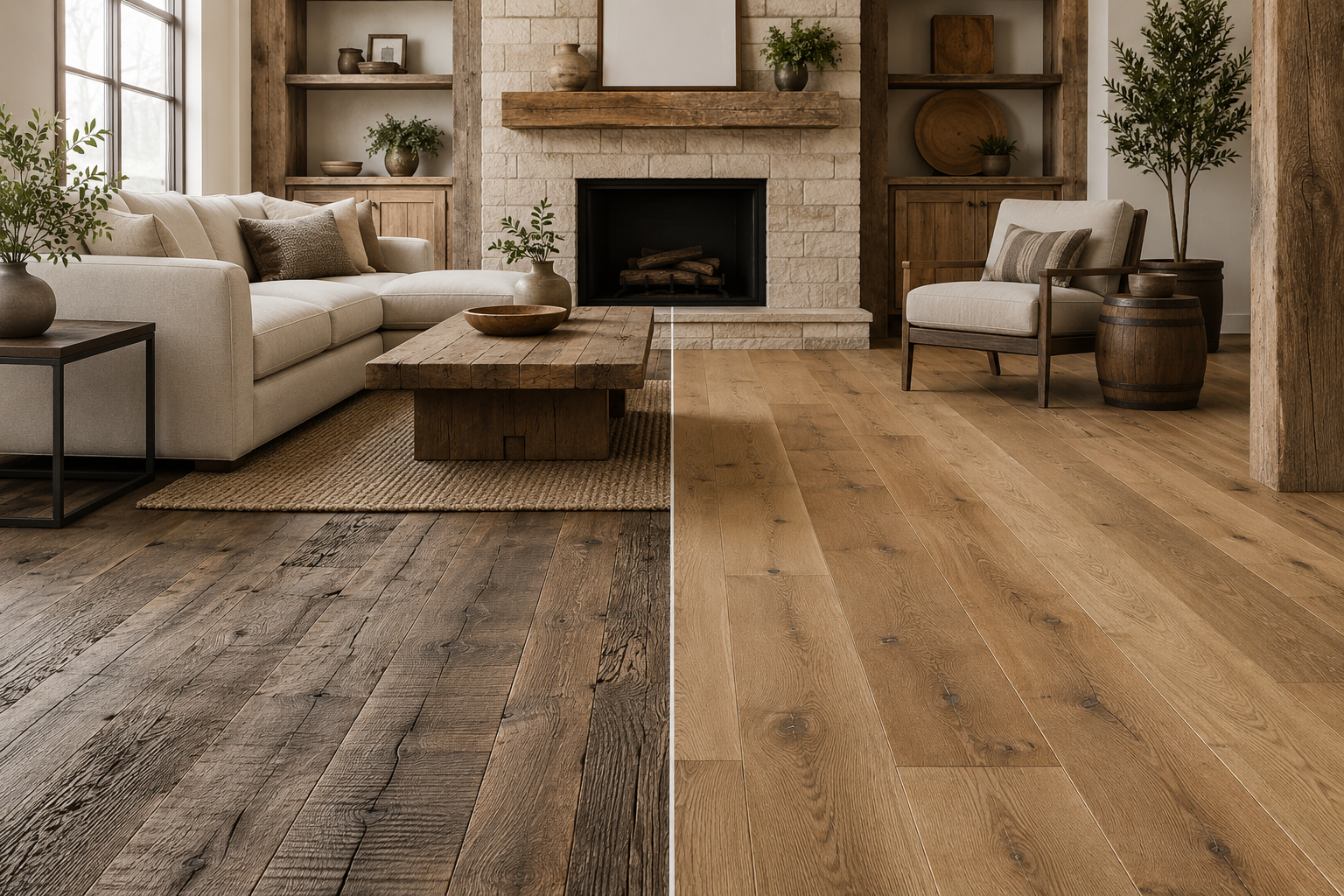
Choose the floor according to the room's moisture exposure, not just the sample's color or texture. Laminate and hardwood flooring can both be appealing options in dry bedrooms, offices, and living rooms where realistic wood visuals and surface hardness are priorities. Hardwood brings a natural grain that laminate only imitates, while laminate holds up better against scratches and day-to-day wear. Review the exact product warranty if pets, frequent spills, or seasonal humidity are concerns.
Choose LVP for a basement that feels damp, a laundry area with supply lines, a mudroom exposed to wet shoes, or a bathroom where water reaches the floor regularly. It also works well when you want one continuous surface through several rooms with different moisture levels.
For a finished basement, use this sequence before ordering material: identify and repair water entry, test the concrete slab, confirm the product is approved below grade, follow the vapor-barrier and underlayment requirements, plan the expansion gap, and leave fixed cabinetry off a floating floor. Those steps protect the installation and help preserve the manufacturer's warranty.
Choose a Floor That Fits the Moisture Risk
Laminate still has a place in dry, climate-controlled rooms, and certain premium systems offer stronger water protection than older products. A damp basement calls for a simpler decision. LVP gives you a waterproof core and a wider safety margin when spills, humidity, or slab moisture are part of the room's reality.
Bring the room measurements, subfloor details, and any history of dampness or leaks when you compare samples.
Floor Source can help you review LVP, laminate, and hardwood options for your Wind Gap-area home, check which products are approved for the space, and plan an installation that accounts for moisture from the beginning.